
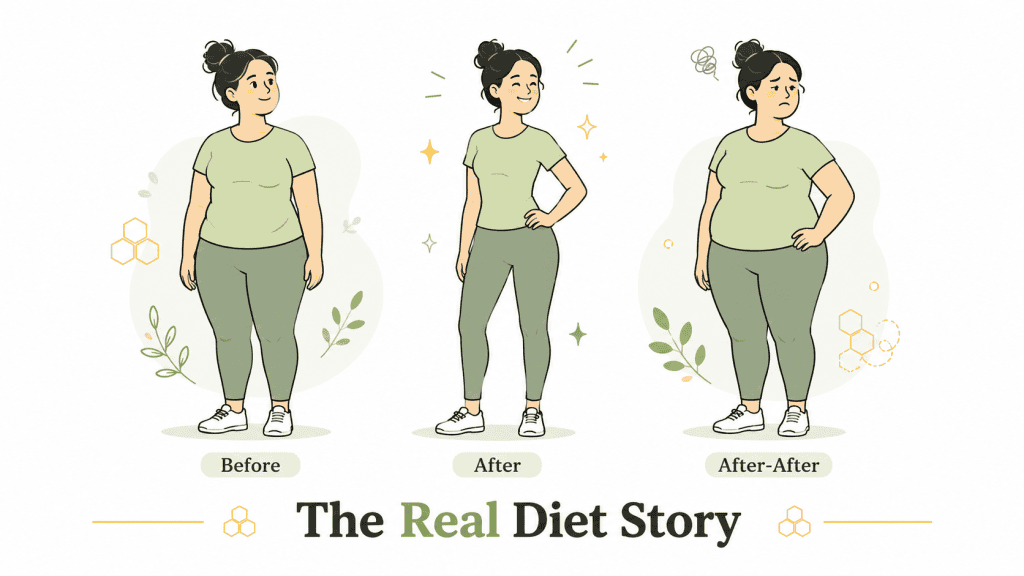
You’re not failing diets. Diets are failing you.
If you’ve ever lost 20 pounds and gained 30 back, this is not your fault.
Let me guess your story. You tried keto. You lost weight. You felt great for a few weeks, and then it all came back. Then paleo. Maybe vegan. Intermittent fasting. Some meal plan from Instagram from someone who swore it changed their life.
And every time, the same thought: What’s wrong with me? Why can’t I stick to it?
Here’s what I wish someone had told you from the start: there’s nothing wrong with you. The problem is the diets themselves.
The Diets Worked. That’s Not the Problem.
Research shows that up to 95% of people who diet gain their weight back.
And here’s the thing — all those diets you tried? They probably worked. Keto worked. Detox worked. Even that shake program your friend sold you probably worked.
But not because they were special. Every diet is just calorie restriction in disguise.
Keto cuts carbs. Whole30 cuts processed foods. Carnivore cuts plants. Different rules, same result. You eat less, you lose weight.
So if diets work, why do most people struggle to lose weight long-term?
Why Diets Fail (It’s Not Willpower)
Think about what actually happens on a diet. Suddenly, bread wasn’t food anymore — it was bad. You stopped going to family dinners because nothing was “diet approved.” You might have been spending hundreds of dollars a month just to keep up.
And then one day, you broke down. You had a slice of pizza. Then another. Maybe a beer. And your brain went: screw this diet, I blew it, I’ll try again Monday.
You blamed yourself. But here’s the truth: you didn’t fail. The diet was built to be temporary.
Ask yourself honestly:
- Can you really eliminate bread forever?
- Can you never eat rice at your family’s table again?
- Can you stick to a diet that costs more than your rent?
No. And you shouldn’t have to.
Diets fail because they ignore three things: your body, your culture, and your actual lifestyle. They’re built for short-term results, not for sustainable weight loss.
What to Do Instead
Look at people who live to 100. They’re not doing keto. They’re not counting every gram of protein. They’re not meal prepping chicken, rice, and broccoli every Sunday.
They’re eating real food. Whole grains, beans, vegetables, some fish, some meat. A whole foods plant-based approach — not 100% vegan, just mostly plants.
The key difference: this approach adds instead of subtracts.
You’re not banning bread or rice or pasta forever. You’re prioritizing real food over ultra-processed stuff. And it doesn’t require you to abandon your culture or spend your entire paycheck at specialty stores.
You don’t need more willpower. You need better systems.
Where to Start
Don’t start by cutting foods. Just add one plant-based meal a day. A lentil soup. A veggie stir-fry. A big salad with beans and olive oil. That’s it.
Let that be your new baseline.
When you focus on adding good food instead of restricting everything, you naturally eat less of the processed stuff — without fighting yourself every day.
You don’t need another diet. You need permission to eat like a normal human being again. Food that supports your health and your happiness. Food that fits your body, your culture, and your actual life.
That’s what real freedom looks like.